The Ultimate Guide to AI Agents in 2026: From Chatbots to Autonomy
Stop chatting, start automating. We have officially crossed the threshold from passive Large Language Models (LLMs) to active, autonomous AI Agents. This deep dive explores the defining technology trend of 2026: systems that can plan, execute, remember, and collaborate to perform complex work without human hand-holding. Learn the architecture, meet the major players, and discover how to deploy your first digital workforce.
Key Takeaways
- 1Understanding why 2026 is the year AI moved from "generating text" to "executing actions."
- 2Deconstructing the four pillars of autonomy: Planning (Reasoning), Memory (Long-term), Tools (APIs), and Action.
- 3Why single agents are insufficient and how "agent swarms" are replacing entire departments.
- 4A look at the dominant platforms defining the space right now.
- 5The new security paradigm of managing autonomous systems that have access to your credit card and codebase.
The Great Decoupling: Why Chatbots Died in 2025
Remember the "Golden Age" of prompt engineering back in 2023 and 2024? We spent hours crafting the perfect paragraph just to get ChatGPT to write a decent email.
By late 2025, that novelty wore off. Businesses realized a hard truth: Generating text doesn't solve problems; executing actions does.
A standard LLM (like the GPT-4 of old) is a brilliant brain in a jar. It has immense knowledge but no hands. It can tell you how to book a flight, but it cannot book it for you. It is passive, ephemeral, and trapped in the chat window.
The 2026 paradigm shift is Autonomy.
An AI Agent is not just an LLM. It is an LLM wrap-ped in a runtime environment that gives it "agency." It can perceive a goal, break it down into steps, use external tools (like a web browser, a terminal, or an API) to execute those steps, learn from its failures, and persist until the job is done.
We are no longer chatting with AI. We are assigning tasks to AI.
The Anatomy of a 2026 Agent
If an LLM is the engine, an Agent is the entire car. To understand how to build or use them, you need to understand their component parts. In 2026, a functional autonomous agent generally requires four key pillars:
1. The Planning Engine (The "Prefrontal Cortex") Before acting, a modern agent must "think." When given a vague goal like "Research competitor pricing and update our database," it doesn't just start clicking. It uses advanced reasoning models (similar to OpenAI's o-series or Google's Gemini Ultra reasoning variants) to create a multi-step plan, anticipate bottlenecks, and prioritize sub-tasks.
2. Memory (The Context Layer) Old chatbots forgot who you were after 30 messages. 2026 agents possess persistent, hierarchical memory.
Short-term memory: The immediate context of the current task.
Long-term memory (RAG + Vector DBs): The ability to recall past mistakes, company SOPs, or user preferences learned months ago. This persistency is what turns a tool into a "coworker."
3. Tool Use (The "Hands") This is the biggest differentiator. Agents are granted authenticated access to external environments. They can read emails, write code to GitHub, execute SQL queries, handle Stripe transactions, or browse the live internet. The ability to reliably interface with APIs is what makes them useful.
4. Action & Feedback Loop The agent executes a step, perceives the output (did it work? did it error?), updates its plan based on that feedback, and takes the next step. This iterative loop is the essence of autonomy.
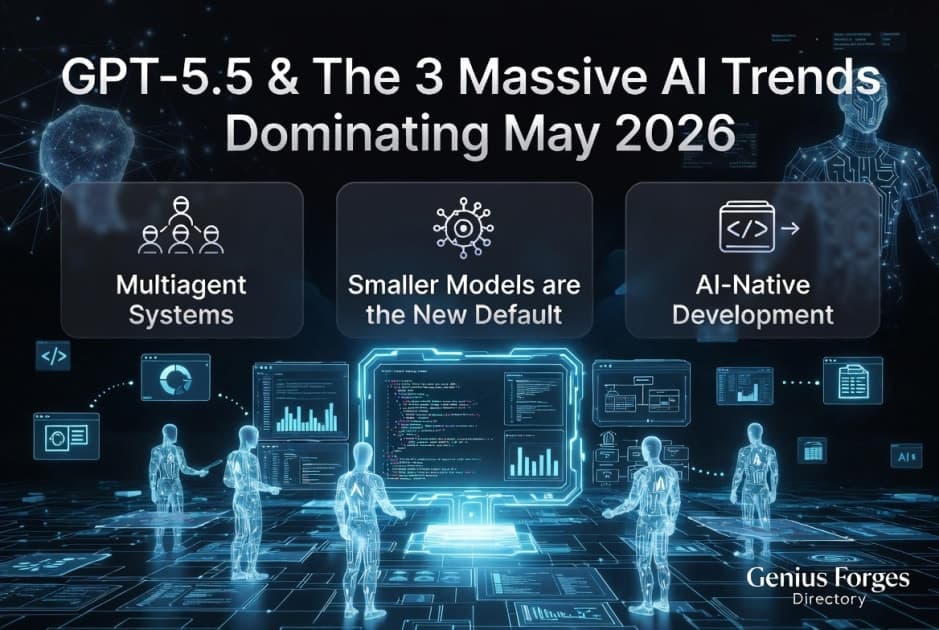
The New Frontier: Multi-Agent Systems (MAS)
If 2025 was the year of the single agent, 2026 is the year of the Agent Swarm.
We quickly realized that asking one "super-agent" to do everything (code a website, write the copy, and market it) leads to mediocrity and hallucinations. It's the same reason you don't hire one human to be your CEO, CTO, and CMO simultaneously.
Enter Multi-Agent Systems (MAS).
This approach involves orchestrating teams of specialized agents that collaborate to achieve a high-level goal.
The Manager Agent: Takes the user's high-level request, breaks it down, and delegates tasks to specialized workers.
The Specialist Agents: A "Coder Agent," a "Reviewer Agent," a "Researcher Agent." They perform their narrow task perfectly and report back.
The Debate Protocol: In 2026, we often see agents "debating" each other to refine answers before presenting them to the human. A "Writer Agent" drafts a post, and a "Critic Agent" tears it apart based on brand guidelines until it's perfect.
MAS mimics human organizational structures, leading to exponentially higher quality outputs than monolithic models.
Real-World Autonomous Use Cases in 2026
Where is this actually hitting the P&L right now?
1. Autonomous FinOps & Procurement Agents are given budgets and tasked with optimizing spend. They monitor AWS usage in real-time, identify unused resources, negotiate lower rates for SaaS contracts via email using predefined parameters, and execute the purchases—only pinging a human for approval over a certain dollar threshold.
2. "Level 3" Software Engineering We moved past GitHub Copilot suggesting lines of code. Now, we have autonomous developer agents. You assign a Jira ticket to an agent. It reads the codebase, plans the implementation, writes the code, writes the unit tests, spins up a sandbox environment to test its own code, fixes its own bugs, and submits a Pull Request for human review.
3. Hyper-Personalized Sales Development (SDRs) Agents that don't just spam templates. They research a prospect's LinkedIn, read their company's 10-K report, identify a specific pain point, draft a highly contextualized email, send it, and handle the initial replies to book a meeting for a human AE.
The Risks—"Hallucinations with Hands"
The hype is real, but so is the danger. When an LLM in 2024 hallucinated, it gave you bad info. When an autonomous agent in 2026 hallucinates, it might delete your production database or order $50,000 worth of wrong inventory.
We have entered the era of Agent Alignment and Security.
The Alignment Problem: Ensuring the agent's actions actually match the user's intent, not just a literal interpretation of the prompt. (e.g., "Maximize profits" shouldn't mean "Sell all company assets immediately").
Permissions & Sandboxing: 2026 IT departments are obsessed with "Least Privilege" for agents. Agents must operate in strictly sandboxed environments with hard limits on what API calls they can make and how much budget they can access.
Human-in-the-Loop (HITL) Guardrails: Critical actions must always require a human "signing off" before final execution. Autonomy is a spectrum, not a binary switch.
The Verdict for 2026: The companies that win won't just be the ones adopting agents; it will be the ones that figure out how to manage, orchestrate, and secure digital workforces effectively.
Want more insights like this?
Join 10,000+ AI practitioners getting weekly playbooks, tips, and strategies delivered to their inbox.